

You may have heard various claims about how abortion affects women’s fertility. This guide aims to clarify the myths and present evidence-based facts about the relationship between abortion and future reproductive health. By exploring recent research insights, you can gain a better understanding of what science says and how it applies to your own concerns regarding fertility. Empower yourself with reliable information to make informed decisions about your health and reproductive choices.
Key Takeaways:
- Research Findings: Studies indicate that abortion does not negatively affect future fertility in most women. The procedures, when performed legally and by qualified professionals, are generally safe.
- Myths Dispelled: Common myths suggest that abortion leads to increased rates of infertility or complications in future pregnancies, but thorough investigations have debunked these claims.
- Individual Factors: Factors such as age, overall health, and pre-existing reproductive issues are more influential on fertility than a history of abortion.

Types of Abortions
Your understanding of the various types of abortions is crucial for making informed decisions. Abortions can be classified into medical and surgical methods. Here’s a brief overview:
- Medical Abortion
- Surgical Abortion
This distinction helps in understanding the available options and their implications for your health.
| Type | Description |
| Medical Abortion | Involves medications to terminate pregnancy. |
| Surgical Abortion | Involves a procedure to remove the pregnancy. |
| Timing | Medical can be done up to 10 weeks. |
| Recovery | Typically requires less recovery time. |
| Consultation | Both methods require professional guidance. |
Medical Abortions
Types of medical abortions generally involve taking two different medications—mifepristone followed by misoprostol—to terminate a pregnancy. This method can be performed within the first ten weeks and is known for being a non-invasive option. The process generally allows you to manage the experience in the comfort of your home, but follow-up with a healthcare provider is crucial to ensure the procedure is complete.
Surgical Abortions
If you choose a surgical abortion, this typically involves procedures such as aspiration or dilation and curettage (D&C), performed by a trained healthcare professional. These methods are usually recommended for pregnancies that have progressed beyond the medical abortion timeline or when other conditions are present that may complicate a medical abortion. Surgical abortions can often be completed quickly, and you may return home the same day.
Abortions can have different recovery experiences based on the method used. Surgical procedures may involve some immediate recovery time, while medical abortions allow more privacy. It’s advisable to discuss your individual circumstances with a healthcare provider to determine which option is best for your needs and to understand any potential implications for future fertility. Your health and well-being should always come first in making these important decisions.
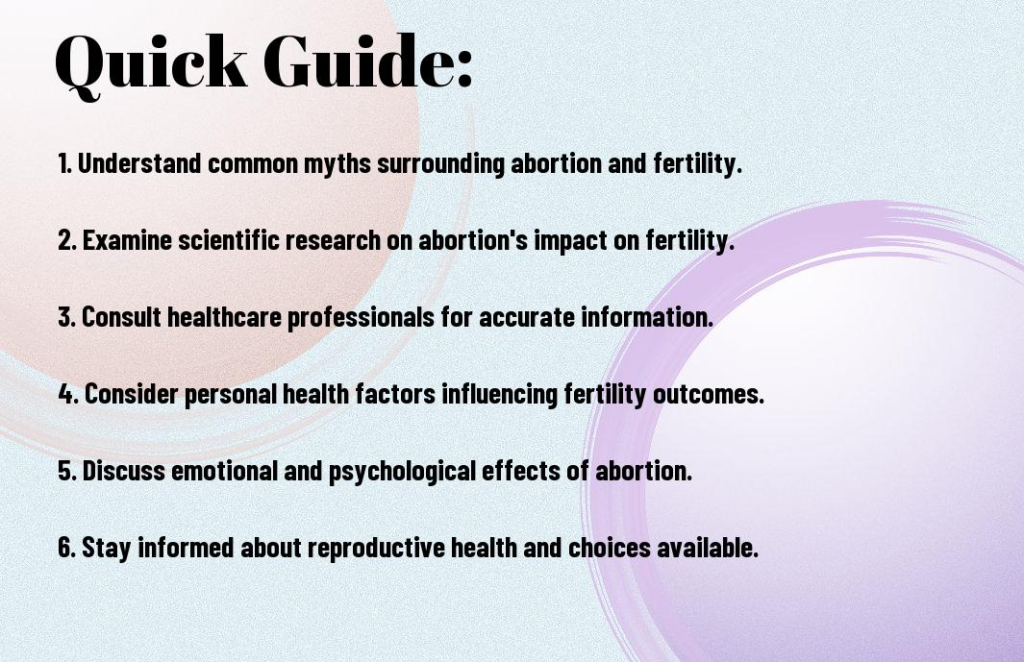
Myths about Abortion and Fertility
Even as discussions around abortion progress, numerous myths persist about its impact on women’s fertility. Many individuals believe that having an abortion can lead to permanent infertility, which is often not supported by scientific evidence. It’s important to separate fact from fiction to empower you with accurate knowledge about reproductive health.
Common Misconceptions
Some common misconceptions suggest that abortion, especially when done safely, will damage reproductive organs or disrupt normal menstrual cycles irreversibly. These beliefs can create unnecessary fear and anxiety for those considering their options. Understanding the reality behind these myths is vital for making informed health choices.
Scientific Clarifications
Even though myths abound, scientific research consistently indicates that legal and safe abortions do not affect future fertility. Many studies show that women who have had an abortion are not at increased risk for infertility. Instead, factors like age or pre-existing health conditions have a more significant role in reproductive health.
This evidence highlights that your fertility is primarily influenced by your overall health and not by the experience of an abortion. It’s also important to note that complications from unsafe abortions can affect fertility, but these situations are not reflective of safe and legal abortion procedures. Understanding these distinctions can help alleviate concerns about your reproductive choices.
Factors Influencing Post-Abortion Fertility
For many women, understanding how various factors affect post-abortion fertility is important. Key influences include:
- Your overall reproductive health
- The type of abortion procedure
- The presence of complications during the procedure
- Your emotional well-being
Perceiving these factors can help you grasp the broader picture of how abortion may impact your fertility.
Health Conditions
The presence of existing health conditions can significantly influence your fertility after an abortion. Conditions such as polycystic ovary syndrome (PCOS), endometriosis, or untreated sexually transmitted infections (STIs) can create hurdles for reproductive health and may require additional management after an abortion.
Age and Timing
On a different note, your age and the timing of the abortion also play a role in post-abortion fertility. Younger women tend to have a higher chance of regaining fertility quickly as their bodies are generally more resilient. Additionally, the timing of your next pregnancy can matter; waiting for a few menstrual cycles allows your body time to heal, optimizing conditions for a successful future conception.
Plus, evidence suggests that women who are under 35 have more favorable outcomes regarding fertility after an abortion. This period often allows for healthier recovery, particularly if the abortion occurs early in the pregnancy. If you are older, it might be beneficial to consult with a healthcare provider about timing and planning for future pregnancies to ensure better reproductive outcomes.
Pros and Cons of Abortion on Future Fertility
Keep in mind that the impact of abortion on future fertility is often debated, with various studies presenting differing views. Understanding both the pros and cons can help you make informed decisions regarding reproductive health.
| Pros | Cons |
| May prevent complications from unwanted pregnancies | Possible risk of infection or injury to reproductive organs |
| Can allow for better family planning | Potential emotional and psychological impacts |
| Empowers you to make choices about your body | Some studies suggest a slight increase in future complications |
| No direct link to infertility in most cases | May affect subsequent pregnancies in rare cases |
| Can relieve financial burdens of unplanned children | Access and care quality can vary widely |
Advantages
Clearly, there are significant advantages to having the option of abortion, particularly when it comes to maintaining your reproductive autonomy. It enables you to plan your family according to your personal, economic, and health circumstances, which can lead to healthier outcomes for both you and potential future children.
Disadvantages
You should also be aware of the disadvantages associated with abortion. While many women experience no long-term effects on fertility, there are risks involved, such as possible infections, scarring, or complications that could affect your reproductive health.
A number of studies have indicated that while abortion is generally safe, complications may occur that impact future fertility. For instance, if an abortion leads to an infection or incomplete abortion, this could result in pelvic inflammatory disease (PID), which can scar the reproductive organs. Additionally, emotional and psychological effects can also influence your future reproductive choices and experiences. Therefore, considering these risks is fundamental for your reproductive planning and decision-making.
Tips for Women Considering Abortion
After making the decision to proceed with an abortion, it’s necessary to prepare yourself for the process ahead. Consider the following tips:
- Research the different types of abortion procedures available.
- Consult with healthcare professionals for personalized advice.
- Understand your rights and what to expect at the clinic.
- Talk to someone you trust for emotional support.
Recognizing the importance of preparation can help you feel more in control during this time.
Preparing for the Procedure
Women should take the time to gather necessary information before the procedure. This includes understanding the method of abortion chosen, the associated risks, and any preparation required on your part, such as dietary restrictions or medications to avoid. Ensuring that you have support and a plan for recovery can also ease anxiety.
Post-Abortion Care
Little attention is often given to what happens after an abortion, yet post-abortion care is important for your well-being. It is necessary to follow physician guidelines regarding rest, emotional health, and any potential signs of complications.
With proper post-abortion care, you can support your body and mind during recovery. It’s advisable to avoid strenuous activity for a few days, maintain a balanced diet, and monitor your emotional health. Should any concerning symptoms arise, such as heavy bleeding or intense pain, contact your healthcare provider promptly. Connecting with support groups can also provide comfort during this time.
Step-by-Step Guide to Understanding Fertility After Abortion
Now, navigating your fertility after an abortion can bring various questions and concerns. Understanding the potential impacts involves knowing the facts and your body’s response. The following table outlines imperative considerations to help clarify your journey towards fertility.
| Immediate Considerations | Long-term Monitoring |
| Evaluate any physical symptoms post-abortion, such as pain or unusual bleeding. | Consult with your healthcare provider regarding your menstrual cycle regularity. |
| Know that it’s usually safe to conceive again shortly after the procedure. | Track your ovulation patterns to better understand your fertility window. |
Immediate Considerations
After an abortion, it’s important to assess any immediate physical symptoms you may experience. Your body is going through significant changes, and addressing issues like pain or unusual bleeding can help ensure your reproductive health is on track. Consult your healthcare provider if you have concerns, as they can offer guidance tailored to your situation.
Long-term Monitoring
Now, long-term monitoring of your reproductive health is imperative in understanding your fertility journey after an abortion. Regular check-ups and discussions with your healthcare provider can help monitor your menstrual cycle and hormonal balance, ensuring they return to normal. Being proactive about tracking ovulation can also empower you to better understand your fertility patterns.
A personalized approach to long-term monitoring allows you to stay aware of your reproductive health. Changes in your menstrual cycle and ovulation patterns after an abortion can vary, so maintaining open communication with your healthcare provider is key. Regular visits can help address any concerns and provide insight into your fertility status, reinforcing your ability to plan for the future effectively.
Summing up
With these considerations, it’s necessary to understand that the prevailing research indicates that abortion does not negatively impact your future fertility. Myths around abortion often stem from misinformation, but studies consistently show that most women can conceive and have healthy pregnancies afterward. By staying informed and seeking evidence-based information, you empower yourself in making decisions that safeguard your reproductive health.