
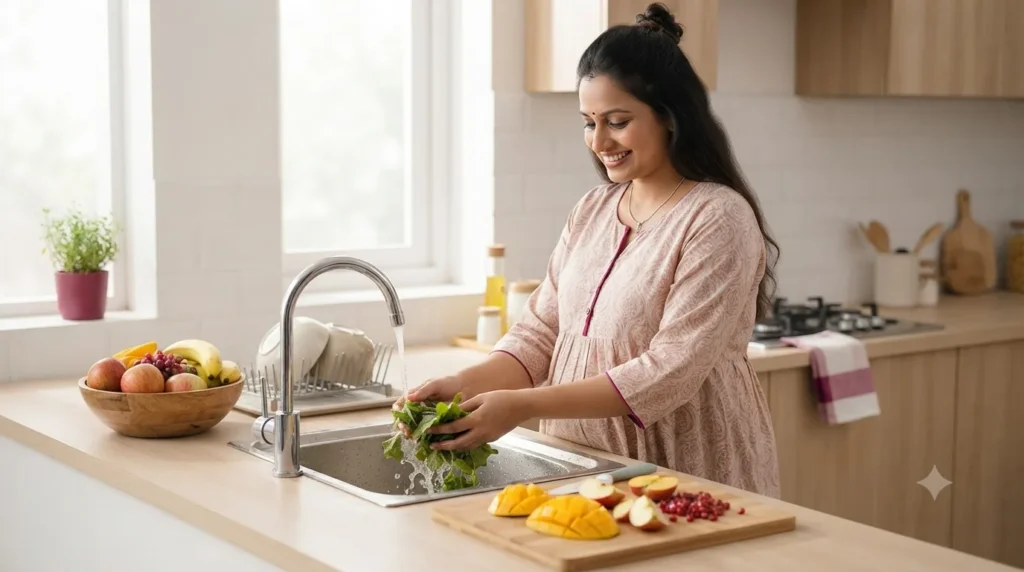
Food safety is especially important during pregnancy and breastfeeding. Changes in the immune system make pregnant women more vulnerable to some food-borne infections, and a few of these can affect the baby.
Why food safety matters in pregnancy
During pregnancy, the body’s ability to fight some infections is lowered. Food-borne illness can cause vomiting, diarrhoea and dehydration, and certain infections such as listeria and toxoplasma can lead to miscarriage, premature birth or infection in the baby.
Four steps to safer food
1. Clean
- Wash hands with soap before cooking and eating
- Wash fruits and vegetables thoroughly under running water
- Keep kitchen surfaces, chopping boards and utensils clean
2. Separate
- Keep raw meat, poultry, fish and eggs away from ready-to-eat foods
- Use separate chopping boards for raw meat and vegetables
3. Cook
- Cook meat, poultry, fish and eggs thoroughly until there is no pink meat and egg yolks are firm
- Reheat leftovers until steaming hot
4. Chill
- Refrigerate cooked food within two hours, in closed containers
- Thaw frozen food in the fridge, not at room temperature
- Do not keep leftovers for more than a day or two
Foods to avoid or take care with
- Unpasteurised milk and soft cheeses made from it
- Raw or undercooked eggs, meat, poultry and seafood
- Street food or cut fruit that may not have been prepared hygienically
- Fish high in mercury, such as shark and king mackerel
- Too much caffeine; limit tea and coffee
- Alcohol, which should be avoided completely
Water and hygiene
Drink boiled or filtered water. Be careful with ice and drinks from unknown sources.
While breastfeeding
The same food safety habits help protect you while breastfeeding. Continue to eat a balanced diet and drink plenty of fluids. See nutrition for a healthy pregnancy and prenatal care.
Frequently asked questions
Can I eat paneer during pregnancy?
Yes, if it is made from pasteurised or boiled milk and stored hygienically.
Is it safe to eat street food when pregnant?
It is best avoided, because hygiene and storage conditions are uncertain.
What should I do if I get food poisoning while pregnant?
Drink plenty of fluids and contact your doctor, especially if you have a fever, cannot keep fluids down or notice reduced baby movements.
If you have questions about your own situation, you can meet our doctors at our Basavanagudi, Koramangala and Ballari centres, or contact us to book an appointment.
This article is for general information and does not replace medical advice. Treatment decisions should be made with a qualified doctor who knows your history.