
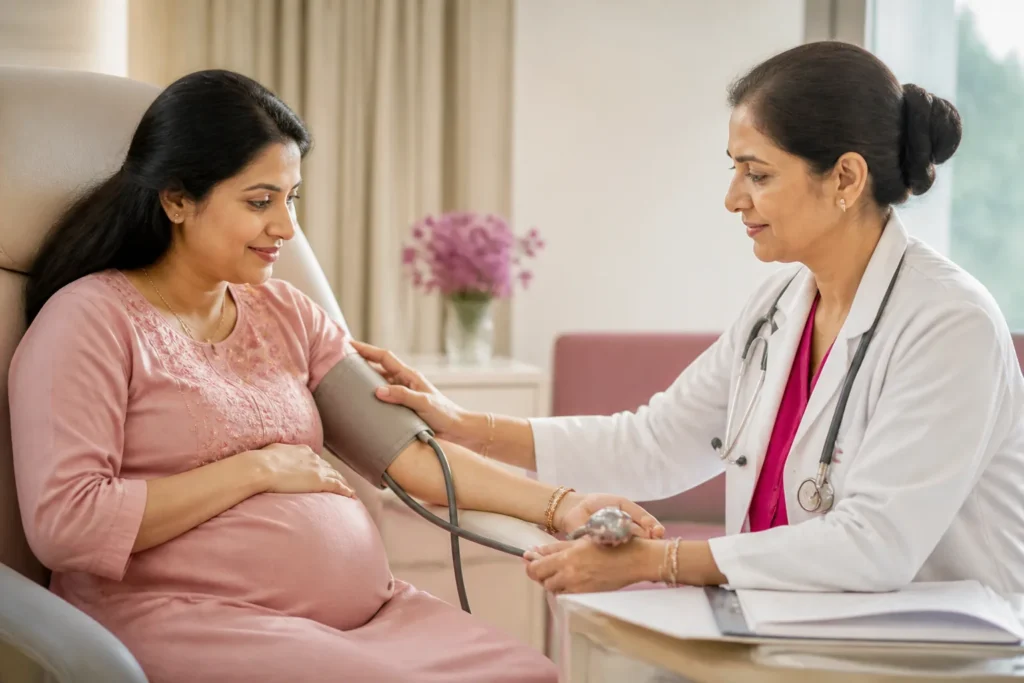
Many women today think about pregnancy in their 40s, whether they are starting a family later or hoping to add to it. Pregnancy at this age is possible, but fertility is lower and some risks are higher, so it helps to understand what to expect and to seek advice early.
Can you get pregnant in your 40s?
Yes. Some women conceive naturally in their early 40s, and others need treatment. The main challenge is that both the number and the quality of eggs fall with age. After about 40, the chance of conceiving each month is much lower than in the early 30s, and the chance of miscarriage is higher. Our article on age and fertility explains why.
How long should you try before seeing a doctor?
At 40 or older, it is usually best to see a fertility specialist before you start trying, or as soon as you decide to. Waiting a year, as younger couples are advised to do, uses valuable time. Read more about when to see a fertility specialist.
What tests are usually done?
- Ovarian reserve tests: AMH and an antral follicle count by ultrasound give an idea of how many eggs remain. See our guide to low AMH.
- Hormone and general health tests: thyroid function, blood sugar, blood pressure and other checks.
- Tests of the uterus and tubes: such as an ultrasound scan or tube test.
- Semen analysis for the male partner.
What treatment options are there?
Treatment with your own eggs
Depending on your tests, options may include ovulation tracking, IUI or IVF. IVF is often recommended in the 40s because it allows more eggs to be collected and embryos to be assessed. Your doctor should explain realistic chances based on your age and results.
Donor eggs
For some women in their 40s, especially with very low ovarian reserve, a doctor may discuss using donor eggs. The chance of pregnancy then depends mainly on the age of the donor. This is a personal decision, and counselling is part of the process.
Is pregnancy after 40 riskier?
Most women over 40 who become pregnant have healthy babies, but some risks are higher, including:
- Miscarriage and chromosomal conditions such as Down syndrome
- High blood pressure, pre-eclampsia and gestational diabetes
- Caesarean delivery and premature birth
Good antenatal care, screening tests and, where needed, high-risk pregnancy care help to manage these risks.
How to prepare
- Have a preconception check-up and review any long-term medicines
- Start folic acid at least three months before trying
- Stop smoking, limit alcohol and aim for a healthy weight
- Manage conditions such as diabetes, thyroid disease and high blood pressure
Frequently asked questions
What are the chances of getting pregnant naturally at 40?
The chance of conceiving each month is much lower at 40 than in the early 30s, and it continues to fall through the 40s. Many women still conceive naturally, but seeing a specialist early helps you understand your own chances.
Can IVF help at 40?
IVF can help some women in their 40s, but the chance of success with your own eggs falls with age. Your doctor will discuss your chances based on your age, ovarian reserve and other tests.
Should I freeze my eggs if I want a baby in my 40s?
Egg freezing works best when done at a younger age, ideally before about 35. If you are already in your late 30s or 40s, discuss whether it is suitable with a fertility specialist.
If you have questions about your own situation, you can meet our doctors at our Basavanagudi, Koramangala and Ballari centres, or contact us to book an appointment.
This article is for general information and does not replace medical advice. Treatment decisions should be made with a qualified doctor who knows your history.