
IVF is a well-established treatment, but its chances of success vary widely from person to person. Understanding the main factors helps you set realistic expectations and make informed choices about treatment.
Age of the woman
Age is the most important single factor. It affects both the number of eggs collected and their quality, which in turn affects the number of healthy embryos. The chance of a pregnancy per IVF cycle falls gradually from the early 30s and more steeply after about 37 to 40. See age and fertility.
Egg quantity and quality
Ovarian reserve tests such as AMH and an antral follicle count help predict how the ovaries will respond to stimulation. A lower reserve means fewer eggs, which may mean more than one cycle is needed. Read more about low AMH and IVF.
Sperm quality
Sperm count, movement and shape all matter. When sperm quality is low, ICSI can be used to inject a single sperm into each egg. A semen analysis is part of the assessment before IVF.
The embryo
Embryo quality depends on the egg and sperm and on the laboratory conditions. Some embryos are grown to the blastocyst stage before transfer, and in some situations genetic testing may be discussed. Not every embryo has the potential to become a pregnancy, even when it looks good.
The uterus
The lining of the uterus needs to be healthy and receptive for an embryo to implant. Conditions such as polyps, fibroids, adhesions or a thin lining can lower the chances and may be treated before transfer. See how uterine conditions affect fertility.
The IVF laboratory
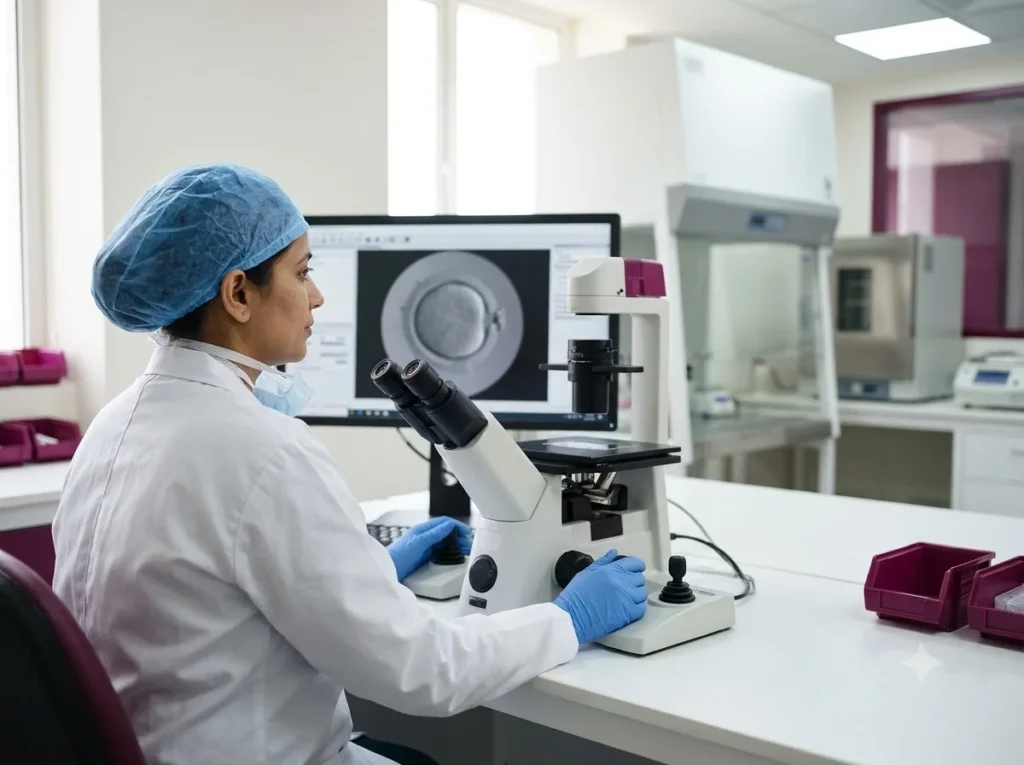
The embryology laboratory affects results through air quality, temperature control, equipment and the experience of the embryologists. Read more in is the embryology lab important for IVF success?
Health and lifestyle
- Smoking lowers egg and sperm quality and should be stopped
- Being significantly over- or underweight can reduce the chances
- Conditions such as diabetes and thyroid disease should be well controlled
- Alcohol and recreational drugs should be avoided
Previous history
The cause of infertility, the length of time trying, and the outcome of any previous cycles all help your doctor estimate your chances and plan treatment.
Frequently asked questions
What is the most important factor in IVF success?
The age of the woman is the most important single factor, because it affects the number and quality of eggs.
Can lifestyle changes improve IVF results?
Stopping smoking, reaching a healthy weight and controlling medical conditions can help. They cannot reverse the effect of age, but they support the best possible outcome.
Does IVF always work the first time?
No. Some people conceive in their first cycle and others need more than one. Your doctor should explain your individual chances before you start.
If you have questions about your own situation, you can meet our doctors at our Basavanagudi, Koramangala and Ballari centres, or contact us to book an appointment.
This article is for general information and does not replace medical advice. Treatment decisions should be made with a qualified doctor who knows your history.