
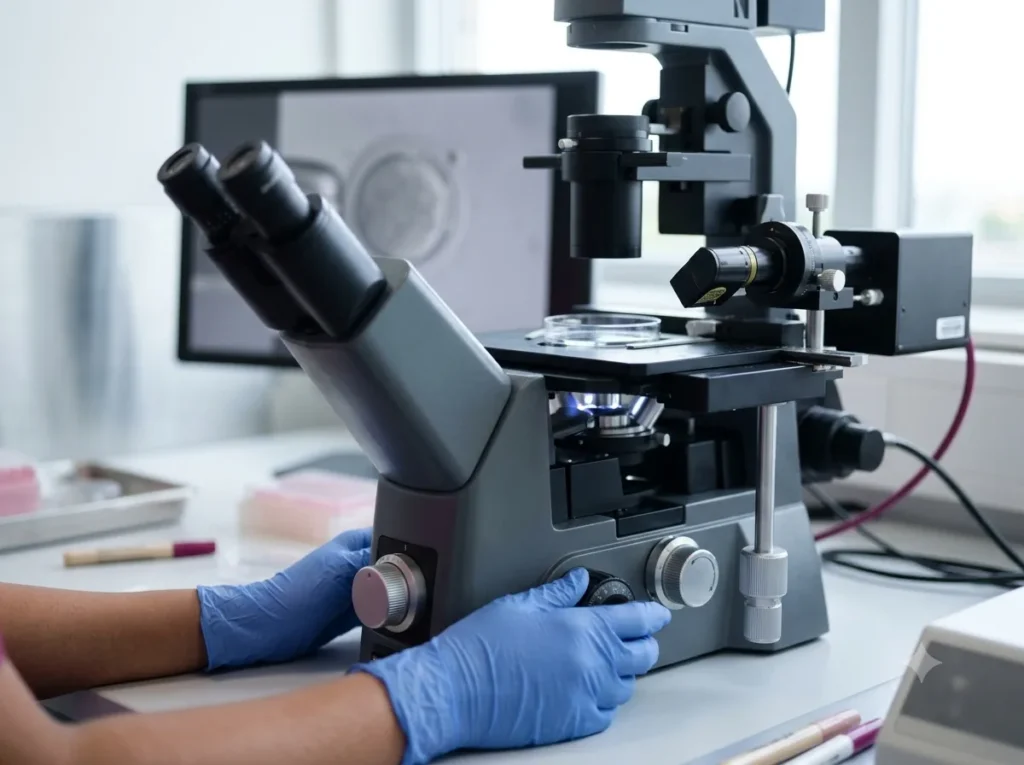
Much of the work in IVF happens in the embryology laboratory, out of sight of patients. The conditions and expertise in this laboratory play an important part in the outcome of treatment.
Why the embryology lab matters
Eggs and embryos are extremely sensitive to their surroundings. Changes in temperature, light, air quality or the culture medium can affect their development. The laboratory’s job is to keep conditions as close as possible to those inside the body.
What happens in the embryology lab?
- Egg identification: eggs are found in the fluid collected from the ovaries
- Sperm preparation: sperm are washed and the healthiest are selected. See are sperm washed before IVF?
- Fertilisation: by conventional IVF or ICSI
- Embryo culture: embryos are grown in incubators for three to five days, sometimes to the blastocyst stage
- Embryo assessment and selection for transfer
- Freezing (vitrification) of eggs and embryos for future use. See frozen embryo transfer
What makes a good IVF laboratory?
- Clean air: filtered air systems reduce particles and chemicals
- Stable incubators: precise control of temperature, gases and humidity
- Experienced embryologists: skilled handling at every step
- Quality control: regular checks of equipment, culture media and results
- Sample identification: systems such as electronic witnessing to prevent mix-ups. See RI Witness technology
Questions to ask about a clinic’s laboratory
- Who are the embryologists and how experienced are they?
- How are eggs, sperm and embryos identified and tracked?
- Are embryos grown to the blastocyst stage when suitable?
- How are embryos frozen and stored?
- Is the clinic registered under the Assisted Reproductive Technology (Regulation) Act, 2021?
The laboratory is one part of the picture
Even the best laboratory cannot overcome every factor. Age, egg and sperm quality and the health of the uterus also matter. Read what affects IVF success.
Frequently asked questions
What does an embryologist do?
An embryologist handles eggs, sperm and embryos in the laboratory, carries out fertilisation and ICSI, monitors embryo development and freezes eggs and embryos.
Why is air quality important in an IVF lab?
Embryos are sensitive to particles and chemicals in the air, so IVF laboratories use filtered air systems to protect them.
Can I visit the IVF laboratory?
Laboratories are kept closed to protect embryos, but you can ask your clinic about its laboratory, staff and procedures.
If you have questions about your own situation, you can meet our doctors at our Basavanagudi, Koramangala and Ballari centres, or contact us to book an appointment.
This article is for general information and does not replace medical advice. Treatment decisions should be made with a qualified doctor who knows your history.