
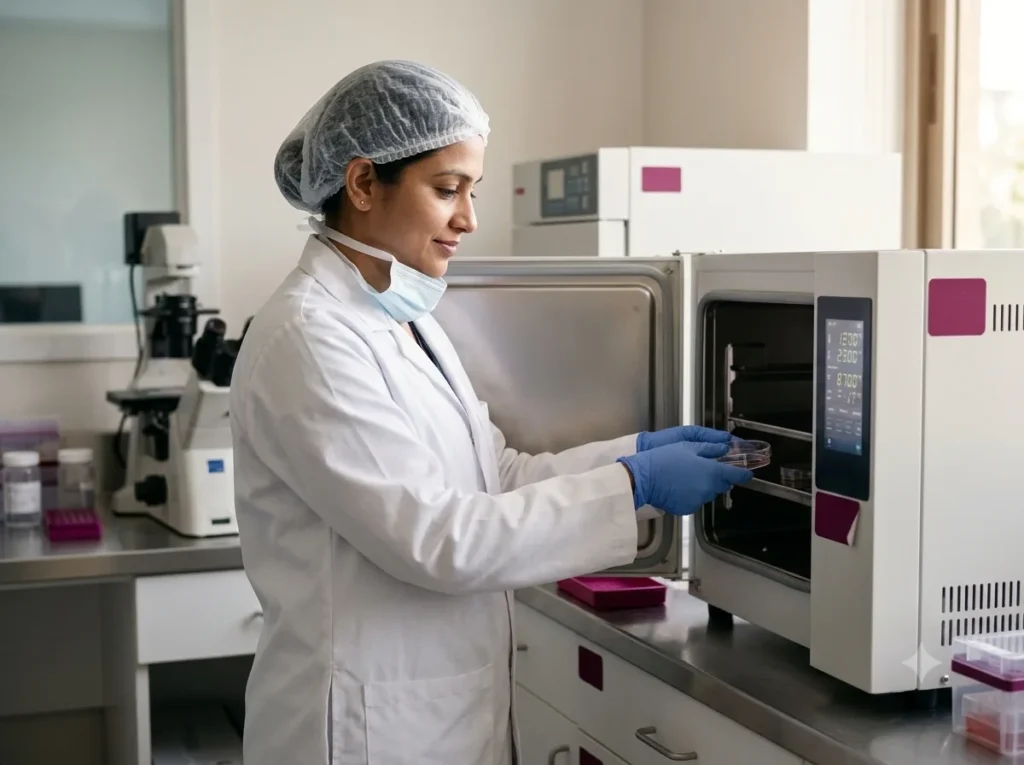
Embryo transfer is the last step of an IVF cycle, but several stages come before it. Understanding each step helps you know what to expect and when.
The embryo transfer process, step by step
1. Preparation and tests
Before treatment, both partners have tests such as hormone tests, an ultrasound scan and a semen analysis. Read tests before starting IVF.
2. Ovarian stimulation
Daily hormone injections for about 8 to 14 days help several eggs mature. Ultrasound scans and blood tests monitor how the follicles grow, and doses are adjusted when needed.
3. Trigger injection
When the follicles are ready, a final injection completes egg maturation. Egg collection is timed for about 34 to 36 hours later.
4. Egg collection
Eggs are collected through the vagina with a fine needle guided by ultrasound, under sedation. The procedure takes about 15 to 30 minutes.
5. Fertilisation
In the laboratory, eggs are mixed with prepared sperm (conventional IVF), or a single sperm is injected into each egg (ICSI).
6. Embryo culture and selection
Embryos are grown in incubators for three to five days. Many clinics grow embryos to the blastocyst stage to help select the embryo most likely to implant.
7. Embryo transfer
The selected embryo is placed in the uterus through a thin catheter, guided by ultrasound. The procedure is quick and usually painless. Remaining good-quality embryos can be frozen for later. See frozen embryo transfer.
8. Aftercare and pregnancy test
Progesterone support continues after the transfer. A pregnancy blood test is done about 10 to 14 days later.
Fresh or frozen transfer?
In a fresh transfer, the embryo is transferred a few days after egg collection. In a frozen transfer, embryos are frozen and transferred in a later cycle, which can suit women at risk of ovarian hyperstimulation or those having genetic testing of embryos. Your doctor will advise which is better for you.
What helps on the day?
- Take medicines exactly as prescribed
- Follow advice about a full bladder for the ultrasound
- Light activity afterwards is fine; bed rest is not needed
Read more about the day itself in what to expect at embryo transfer.
Frequently asked questions
How long does the whole IVF process take?
From the start of stimulation to embryo transfer usually takes about two to three weeks, plus about two weeks until the pregnancy test.
How many embryos are transferred?
Often a single embryo, to reduce the risk of twins. Your doctor will advise based on your age and embryo quality.
Is a frozen embryo transfer as good as a fresh one?
For many women, frozen transfers give similar results to fresh transfers. The best choice depends on your situation.
If you have questions about your own situation, you can meet our doctors at our Basavanagudi, Koramangala and Ballari centres, or contact us to book an appointment.
This article is for general information and does not replace medical advice. Treatment decisions should be made with a qualified doctor who knows your history.