
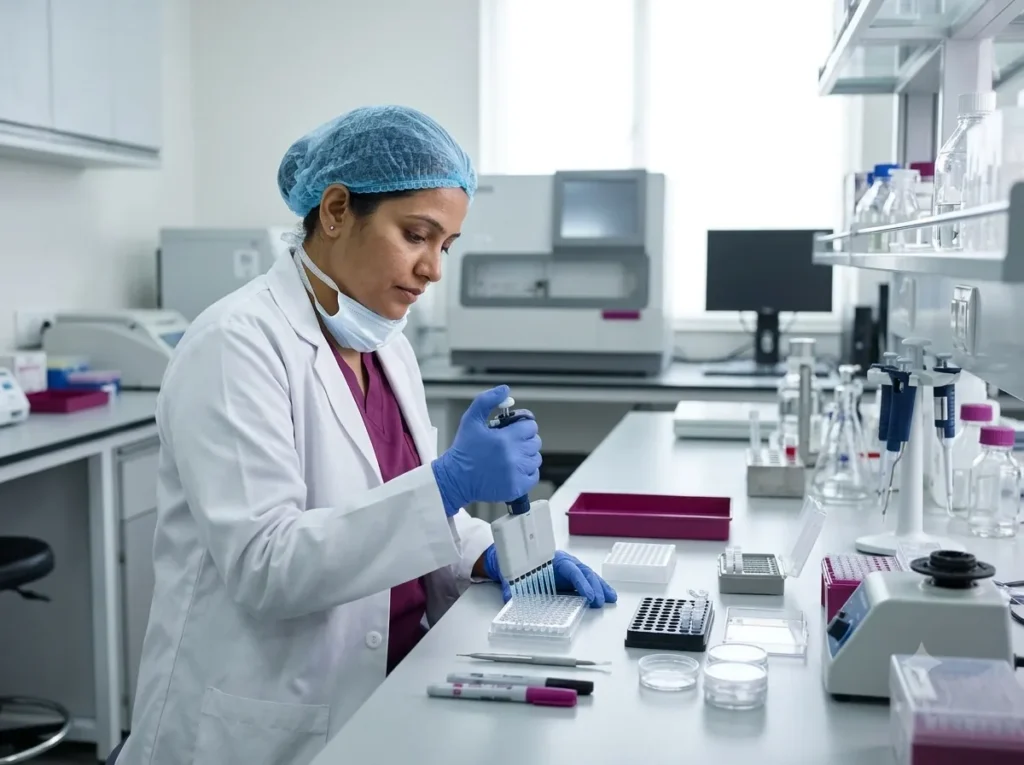
Preimplantation genetic screening, now usually called PGT-A, is a test that checks embryos created through IVF for chromosomal problems before one is transferred to the uterus.
What is PGS?
Each embryo should have 46 chromosomes. Embryos with missing or extra chromosomes (aneuploidy) often fail to implant or lead to miscarriage. PGS looks at the chromosomes in a few cells taken from the embryo to identify those with a normal number. See preimplantation genetic screening.
How is it done?
- Embryos are grown to the blastocyst stage (day 5 or 6)
- A few cells are taken from the outer layer, which will become the placenta, not the baby
- The embryos are frozen while the cells are tested
- A chromosomally normal embryo is chosen for frozen embryo transfer
How PGS can help
For some people, PGS may:
- Reduce the chance of transferring an embryo that would not implant or would miscarry
- Reduce the time and number of transfers needed to reach a pregnancy
- Support single embryo transfer, lowering the risk of twins
Who may consider PGS?
- Women in their late 30s or 40s, where chromosomal problems in embryos are more common
- Couples with recurrent miscarriage. See recurrent pregnancy loss
- People with repeated unsuccessful IVF cycles. See when IVF keeps failing
Limitations
- PGS does not guarantee a pregnancy, and it has not been shown to increase the overall chance of a baby for everyone
- Results are not 100% accurate, and some embryos show a mix of normal and abnormal cells (mosaicism)
- Some embryos may not survive the biopsy and freezing process
- It adds cost to treatment
PGT-M and PGT-SR
Different tests are used for couples who carry a known single-gene condition (PGT-M) or a chromosomal rearrangement (PGT-SR). These require genetic counselling first. See genetic testing in fertility.
Frequently asked questions
Is PGS the same as PGT-A?
Yes. PGS is the older name for preimplantation genetic testing for aneuploidy (PGT-A).
Does PGS harm the embryo?
The biopsy takes cells from the layer that becomes the placenta. When done by experienced embryologists, the risk to the embryo is low but not zero.
Do I need PGS?
Not everyone does. Your doctor will discuss whether it may help, based on your age, history and number of embryos.
If you have questions about your own situation, you can meet our doctors at our Basavanagudi, Koramangala and Ballari centres, or contact us to book an appointment.
This article is for general information and does not replace medical advice. Treatment decisions should be made with a qualified doctor who knows your history.